ARTHINA
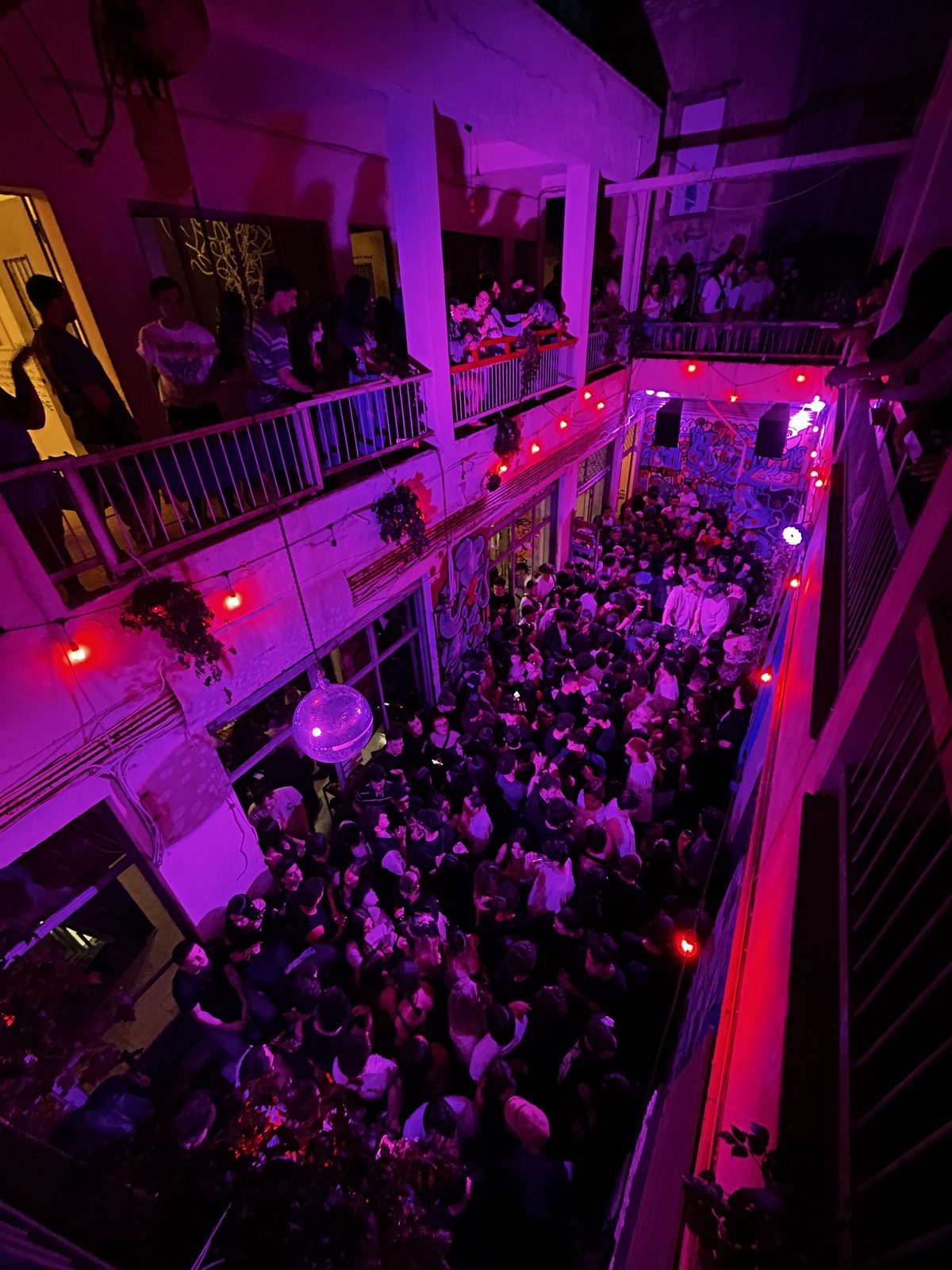
Six months earlier the space did not exist as a museum. By summer it had a programme, fourteen artists, a bar, a door and more than ten thousand visitors.
The brief
ARTHINA was a pop-up street-art museum founded from zero in an Athens courtyard. There was no inherited operating system to improve. The venue, curation, artists, permits, budget, bar, programming and visitor experience all had to be assembled into one functioning thing.
That made it a pure operator project. Creative decisions could not be separated from budget decisions, and neither could be separated from permits, production or the person standing at the door.
What we actually owned
The hardest part of a temporary cultural project is that every system has to become mature quickly. A permanent institution can improve over seasons. A pop-up has a compressed window: opening, operations and learning all happen almost at the same time.
Curation had to fit the space. Install had to fit the calendar. The bar and visitor flow had to coexist with the exhibition rather than turning it into event decoration. Public programming had to create additional reasons to visit without making the museum feel like a venue that happened to have art on the walls.
What made it hard
The budget was finite and visible. Cultural ambition can expand forever; operational capacity cannot. Every addition had a cost in money, time, complexity or attention. The job was therefore not to maximise the number of ideas. It was to decide which ideas made the project more coherent and which merely made it busier.
What stayed with us
ARTHINA remains the clearest example of Dubel Team’s “operator, not advisor” position because the output was physical and public. People either arrived or they did not. The room either worked or it did not. The budget either held or it did not.
It also reinforced a principle that now shapes Build: the value is not in having the idea. The value is in turning many unrelated constraints into one thing that exists and can be used by real people.